
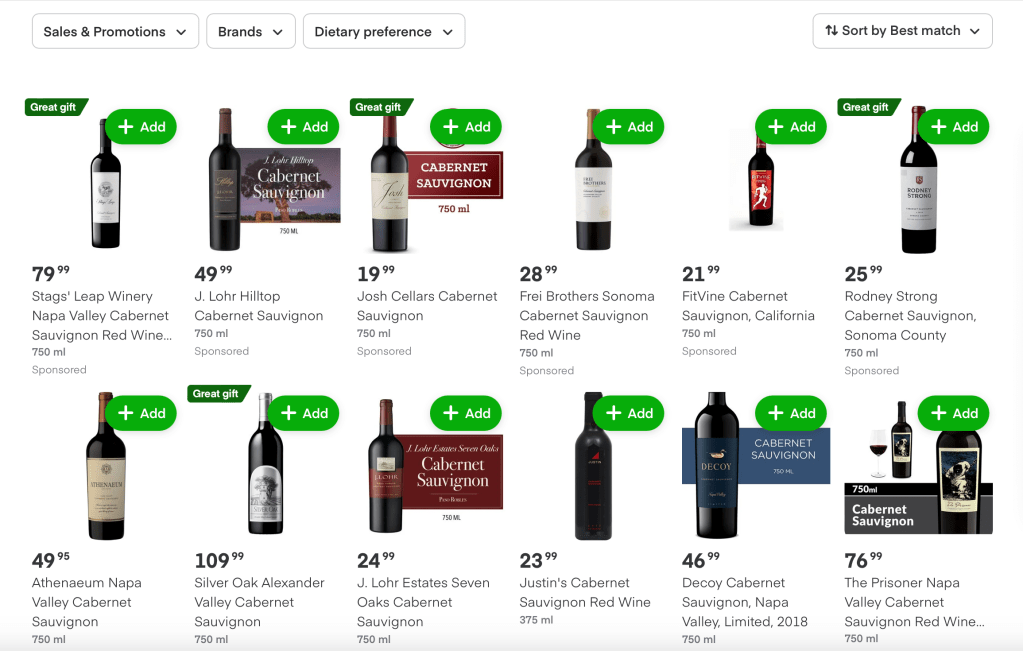
Instacart is a popular grocery delivery service that allows consumers to shop for groceries online and have them delivered to their doorstep. For wineries, selling wine through Instacart can be a valuable way to reach a wider audience and drive sales of wholesale SKUs.
One key benefit of selling wine through Instacart is the convenience factor. Many consumers are looking for ways to save time and avoid the hassle of shopping in stores, and Instacart allows them to do just that. By making it easy for consumers to purchase wine through the service, wineries can increase the likelihood of conversions.
Another advantage of selling wine through Instacart is the ability to reach a wider audience. With a presence in over 5,000 cities throughout the United States, Instacart allows wineries to reach consumers in areas where they may not have a physical presence, and also comply with tied-house laws since Instacart is partnered with many retailers. This can be especially valuable for wineries looking to expand their reach, promote first trial, accelerate shelf-pull, and build brand awareness.
To maximize the value of selling wine through Instacart, wineries should consider implementing a targeted advertising strategy. This can focus dollars on key markets and high-volume SKUs through keyword bidding. By targeting consumers at the point of purchase with featured wines, wineries can effectively reach and engage with consumers through the service. Overall, selling wine through Instacart can be a valuable way for wineries to reach a wider audience and drive sales. By leveraging the convenience factor and targeting the right audience, wineries can effectively use the service to boost their sales, focus on trial, and build brand awareness.
Note About This Blog Post
This content was created with the help of OpenAI’s GPT-3 language model, ChatGPT, based on prompts and content curation by the team at DigitalMarketingWine.com. The AI created content was further reviewed and edited by a digital marketing expert. The information provided is based on industry best practices, and should be used for general guidance. To implement these strategies and tactics requires additional support and adaptation to business needs.
 Digital Marketing Wine